High-performance networks need more than fast connections. They need hardware that can handle large amounts of traffic, support different network interfaces, and adapt as network needs change. This is where router chassis and modules become important.
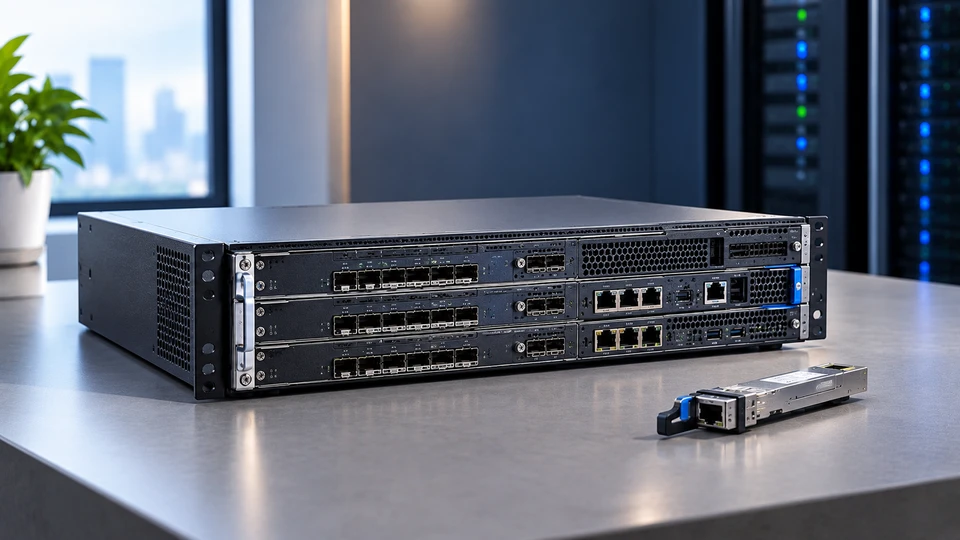
A router chassis provides the physical structure for a modular routing system. It holds components such as line cards, route processors, power supplies, cooling units, and switching fabric. Router modules then add the ports, processing functions, and other capabilities the network needs.
This design gives network teams more room to build systems around their actual requirements. They can add or replace certain components instead of replacing an entire router.
Understanding Router Chassis in Networking Systems
A router chassis is the main physical enclosure of a modular router. Think of it as the frame that holds the major parts of the routing system in fixed positions.
A chassis can contain several slots for different hardware modules. Depending on the router design, these slots may hold line cards, route processors, fabric modules, system controllers, or other hardware.
The chassis also houses the systems that keep the router running. These can include power supplies and fan trays. High-capacity chassis routers may use several power supplies and cooling units so that the system can keep operating if one component fails.
The physical design matters because each component has to communicate with the others at very high speeds. Some modular routers use a backplane or midplane to connect the cards inside the chassis. Newer designs can use direct connections between line cards and switching fabric modules. Cisco's NCS 5500 and 5700 platforms, for example, use an orthogonal design in which line cards connect directly with fabric modules rather than using a traditional midplane.
The chassis also gives network teams room to add hardware as their requirements grow. A system with several available slots can start with only the modules needed at installation and receive new modules later, provided the chassis supports them.
What Are Router Modules?
Router modules are removable hardware units that add specific functions to a modular router.
A module can provide network ports, packet forwarding, routing control, switching capacity, or other functions depending on the router platform. The exact names differ between manufacturers and router families.
Line cards are among the most common modules in high-capacity routers. They provide physical network interfaces and handle packet forwarding functions. A single chassis may support several types of line cards, giving the network team a choice of port speeds and interface types.
Other modules can handle routing control. A route processor manages routing information and system control functions. Cisco's 8800 Series modular routers, for example, use route processors to run the network operating system, handle chassis management, process routes, and distribute forwarding information to line cards.
Fabric modules serve another purpose. They provide the internal switching path that connects line cards inside the router. This becomes especially important when a chassis handles traffic across many high-speed interfaces.
Router modules can also be designed for redundancy. A chassis may contain multiple route processors, fabric modules, power supplies, or cooling units so the system can continue working when one component needs replacement or stops functioning.
Core Components of Router Architecture
The architecture of a modular router brings several hardware parts together inside one chassis.
Chassis
The chassis forms the physical structure. It provides slots, mounting points, internal connections, airflow paths, and space for the main hardware.
Line Cards
Line cards provide network interfaces and packet forwarding resources. Different cards can support different port counts and speeds. Modern modular routers can support interfaces ranging from lower-speed Ethernet connections to 100GbE, 400GbE, and higher-speed interfaces, depending on the platform.
Route Processors
The route processor handles routing control and system management. It maintains routing information and communicates forwarding information to the appropriate hardware.
Many high-end systems use two route processors for redundancy. If one processor fails or requires maintenance, the second processor can maintain system control, depending on the platform's design.
Switching Fabric
The switching fabric connects the line cards and moves traffic between them inside the router. High-capacity chassis systems may use several fabric modules to provide the internal bandwidth required by many line cards.
Cisco's NCS 5500 and 5700 systems, for example, use multiple fabric modules that connect to the line cards and provide the internal switching path.
Power Supplies
Power supplies provide electricity to every component in the chassis. High-performance routers can consume large amounts of power, particularly when they contain many high-speed interfaces.
Multiple power supplies can provide redundancy. Some platforms also support different power configurations based on the installation environment.
Cooling System
High-speed processing and dense hardware generate heat. Fans and fan trays move air through the chassis to keep components within their operating temperature range.
Airflow direction matters in a data center because it needs to match the room's cooling design. Many modular routers use front-to-back airflow.
How Router Chassis and Modules Work Together
The Router chassis and modules form one routing system rather than operating as separate devices.
Network traffic enters through an interface on a line card. The router processes the packet and determines where it needs to go. The forwarding hardware then sends the traffic through the internal switching path toward the correct output interface.
The route processor handles control functions and keeps routing information available to the system. The line cards handle the actual network traffic, while the fabric connects the different line cards within the chassis.
This separation lets each part perform a defined job. It also gives the hardware design room for expansion.
For example, a network may start with several line cards and later require more ports. If the chassis has free compatible slots, the network team may install new line cards rather than replacing the complete router.
The same principle applies to other components. Some chassis designs support replacement of individual hardware units while the rest of the system remains in service. Cisco's 8800 modular routers, for example, specify hot-swappable line cards, route processors, fabric modules, power supplies, and cooling components.
This makes modular architecture useful for networks where traffic levels, port requirements, and hardware needs change over time.
Role in High-Performance Enterprise Networks
High-performance networks move large amounts of traffic between users, applications, servers, data centers, cloud environments, and remote locations. The router has to process this traffic without becoming a bottleneck.
A modular router can provide a large number of interfaces inside one physical system. It can also combine different types of line cards according to network requirements.
In a data center, a chassis router may handle traffic between major network segments or connect the facility to external networks. In a large enterprise, it can sit at the core or edge of the network and connect different sites and services.
High-capacity routers also play a major role in telecom and service provider networks. These environments can carry traffic for many customers and locations at the same time. Modern platforms are built to support high-density interfaces and very high internal throughput. Cisco's NCS 5500 and 5700 platforms, for example, support high-speed interfaces for data center, enterprise, WAN aggregation, core, and peering uses.
The hardware must also handle power, cooling, redundancy, and physical space. A router that supports many high-speed ports needs enough internal bandwidth to move traffic between those ports without creating a major internal limit.
Benefits of Modular Router Architecture
The biggest benefit of modular architecture comes from being able to change parts of the system without replacing the entire chassis.
Easier hardware upgrades:
Network teams can add compatible line cards when they need more interfaces. They can also replace older modules when a platform supports newer hardware.
Better growth planning:
A chassis with open slots gives a network room for future hardware. Teams can plan capacity around expected traffic and port requirements instead of buying a completely new router each time they need more interfaces.
Reduced hardware replacement:
If a single module fails, technicians may replace that component instead of removing the whole routing system.
More configuration choices:
Different modules can support different interface speeds and functions. This lets a single chassis serve several network requirements.
Better use of physical space:
A large modular router can place many interfaces and processing components inside one managed chassis instead of spreading every function across separate physical devices.
The exact benefits depend on the platform. A modular router only provides useful expansion when its available slots, power capacity, cooling capacity, software support, and compatible modules can support the planned configuration.
Use Cases of Router Chassis and Modules
Data Center Networking Systems
Data centers need high-speed connections between servers, storage systems, network zones, and external networks. Modular routers can provide dense connectivity and high internal bandwidth for these environments.
Enterprise IT Infrastructure
Large enterprises may connect offices, data centers, cloud services, internet links, and private networks through central routing infrastructure. A modular chassis can provide enough interfaces for these connections while leaving room for future hardware.
Telecom Backbone Networks
Telecom networks move huge amounts of traffic across regional and national infrastructure. Modular routing systems can provide the port density, forwarding capacity, redundancy, and hardware flexibility required at major network locations.
Cloud and Service Provider Environments
Cloud and service providers need routers that can handle high traffic volumes and support different connection speeds. Modular platforms can combine multiple line cards and fabric modules inside one system. Juniper's PTX10008, for example, uses a modular chassis with eight line card slots and is designed for high-speed networks supporting 100GbE, 400GbE, and 800GbE connections.
Future of Router Chassis and Modular Systems
Router chassis design continues to change as networks demand more bandwidth from less physical space.
Modern systems are moving toward higher-speed interfaces, denser hardware, improved power management, and more advanced internal switching designs. Router manufacturers are also using architectures that reduce physical connection limits between modules.
Software plays a larger role too. Modern routing platforms can support automation, programmability, telemetry, and software-based network management. Juniper's MX10000 modular platforms, for example, support streaming telemetry and OpenConfig for network management and automation use cases.
Cloud-managed networking can also change how teams monitor and control hardware. The physical chassis still performs the routing work, but software tools can provide centralized visibility and management.
The focus in 2026 is not simply on adding more ports. Network teams also need hardware that can handle higher interface speeds, provide enough internal bandwidth, manage power and heat, and support replacement or expansion with limited service disruption.
Conclusion
Router chassis and modules provide a flexible hardware structure for high-performance networks. The chassis houses the main components, while modules provide routing, forwarding, interfaces, switching, control, power, and cooling functions.
This architecture works well in environments where traffic keeps growing and network hardware needs to change over time. Instead of treating a router as one fixed device, modular networking systems divide important functions across replaceable hardware units.
For enterprise networks, data centers, telecom infrastructure, and cloud environments, that design can provide more room for hardware expansion, easier component replacement, and greater choice in network interfaces.
The right modular router still depends on the network's traffic volume, interface requirements, power capacity, physical space, redundancy needs, and expected future growth.
If you're building a broader understanding of enterprise networking hardware, our Guide to Understanding Bridges and Routers in Computer Networking explains how bridges and routers fit into computer networks and how these devices support communication across modern IT infrastructure.
Frequently Asked Questions
A: A router chassis is the main physical enclosure of a modular router. It holds components such as line cards, route processors, switching fabric modules, power supplies, and cooling units. The chassis provides the slots and internal connections needed for these components to work as one routing system.
A: Router modules add specific functions to a modular router. Line cards provide network interfaces and forwarding resources, while route processors handle routing control and system management. Fabric modules provide internal connections between line cards. Other modules may handle power, cooling, or system control.
A: The chassis provides the physical structure and internal connections for the modules. Traffic enters through a line card, gets processed by the routing and forwarding hardware, travels through the internal switching fabric when required, and leaves through the appropriate interface.
A: Router modules provide dedicated hardware for different routing functions. Multiple line cards can provide many high-speed interfaces, while fabric modules provide the internal bandwidth needed to move traffic between them. The exact performance depends on the router architecture and the modules installed.
A: A chassis can provide multiple slots for compatible modules. Network teams can use available slots for new line cards or other supported hardware as requirements grow. The chassis also needs enough power, cooling, internal bandwidth, and software support for the planned expansion.
A: Yes. Modular router systems remain important in high-capacity networks that need many interfaces, high internal bandwidth, hardware redundancy, and room for expansion. Current modular platforms continue to support high-speed Ethernet interfaces and large chassis configurations for data center, enterprise, WAN, and service provider networks.