


Product Description
HPE P07194-B21 3.84TB NVMe Read Intensive SFF SCN SSD
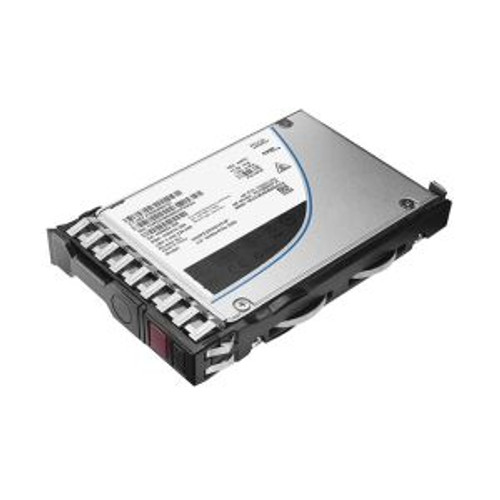
SCN is the carrier to check, and it trips people up. Smart Carrier NVMe is a different tray from the SC carrier your SAS and SATA drives sit in, and the two are not interchangeable. Your server also needs bays wired for NVMe with direct PCIe lanes, not a SAS controller in front of them. Many ProLiants have a mix, with only some front bays NVMe-capable.
Storage and Performance
3.84TB of TLC flash on a PCIe x4 NVMe link. Sequential reads reach 3,200MB/s with writes at 3,050MB/s, which is unusually close for a read-intensive drive. Random reads run to 129,000 IOPS at queue depth 16, peaking around 780,000, against 97,000 writes. Read latency is 125 microseconds; write latency is 25 microseconds.
Endurance is 1 drive write per day, totalling around 7,000 TB written. Digitally signed firmware is included. Three-year warranty, and HPEs spare number is P10654-001.
Suitable Applications
Read-heavy work at capacity. Content serving, VDI, analytics, caching tiers, archive retrieval. Anywhere a crowd of clients reads from the same large dataset and writes arrive occasionally.
Sustained writing is what this tier cannot absorb. At 1 DWPD, you get roughly 3.84 TB of writing daily across five years, which database logging or a busy VM datastore will exhaust early. HPEs mixed-use NVMe range covers those.
Compatibility and Deployment
Beyond the carrier and the bay wiring, check drive height. This part is a standard 15mm SFF drive, so bays built only for 7mm drives will not take it.
NVMe drives draw more power and run hotter than SATA equivalents. A fully populated chassis needs airflow planned for that rather than discovered afterward.
Dropping Latency Without Changing the Server
Moving a read-heavy dataset from SAS to NVMe cuts latency and multiplies IOPS in bays the server already has. The constraint is usually which bays are wired for it, not the drive.